Booth Signs & Displays for Artists

Create a booth that stands out at conventions, art shows, and artist alley events. The right signage and display prints don’t just look good—they help draw people in.

Build a Professional Booth Setup

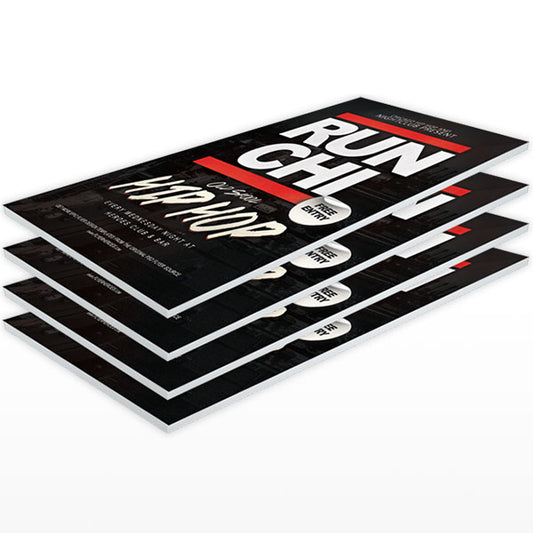
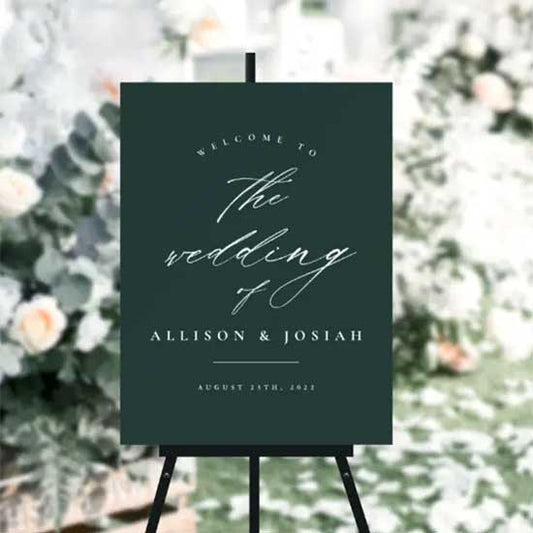
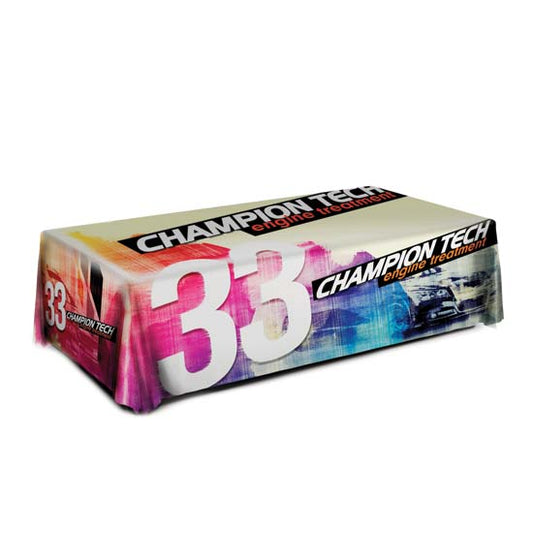
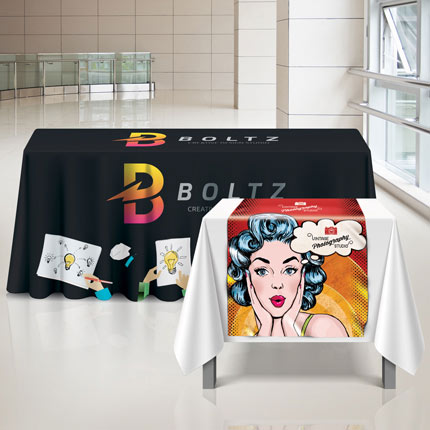
Start with the core display products that help define your booth. From rigid signs and backdrops to banners and table covers, these essentials create a clean, eye-catching setup that attracts attention and increases sales.

Artist Alley Starter Kit

A convention-ready print bundle for artists who want a clean, confident booth setup at Comic Cons, Artist Alley events, and creator markets. Pick a print starter kit for maximum value. Each tier is built around what successful booths actually stock. All printing is on our luxury matte cardstock.

View Starter Kits

Booth Signs & Displays for Artists — Convention & Vendor Setups

Booth Signs & Displays for Artists

Your art deserves a booth that works as hard as you do. Whether you're setting up at an anime convention, comic con, local art market, or gallery event — the right signage and displays are what separate a table people walk past from one they stop at. At Printkeg, we specialize in affordable, professional printing built specifically for artists: bold display prints, foam board signs, banners, and tabletop signage that make your booth look polished, eye-catching, and impossible to ignore.

Why Booth Signage Is a Sales Tool, Not Just Decoration

At a busy convention or art show, you have roughly three seconds to catch someone's eye as they walk the aisle. Those three seconds determine whether they stop, slow down, or keep moving. Your signage is doing that job constantly — before you've said a word, before anyone has picked up a print.

Attract From a Distance

Large display prints and banners work from 20–30 feet away. They communicate your art style, your color palette, and your aesthetic before anyone gets close. If your booth looks compelling from across the aisle, people will walk toward it. That's foot traffic you don't have to earn conversation by conversation.

Signal Professionalism

A well-signed booth communicates that you take your craft seriously — and buyers respond to that. Consistent branding, clear pricing signs, and quality display prints position you as a serious artist, not a hobbyist with a table. That perceived professionalism directly affects how much buyers are willing to spend.

Reduce Friction for Buyers

Clear pricing signs, commission info boards, and product category labels mean buyers don't have to ask basic questions before they're ready to buy. Reducing that friction — making it immediately obvious what something costs and what's available — increases conversion. People buy more when they don't have to work to figure out the setup.

Create a Memorable Identity

Conventions have hundreds of booths. Cohesive branding — consistent colors, a recognizable logo, a visual identity that carries from your banner to your table signs to your print display — makes your booth memorable. Buyers who don't purchase on day one can find you again on day two because they remember what your setup looked like.

Display Prints vs. Art Prints: Understanding the Difference

Both are prints. But they serve entirely different purposes at your booth — and confusing the two is one of the most common setup mistakes convention artists make.

Display Prints

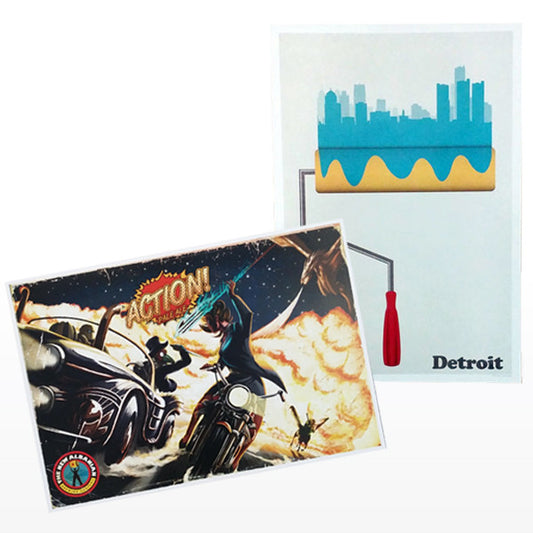
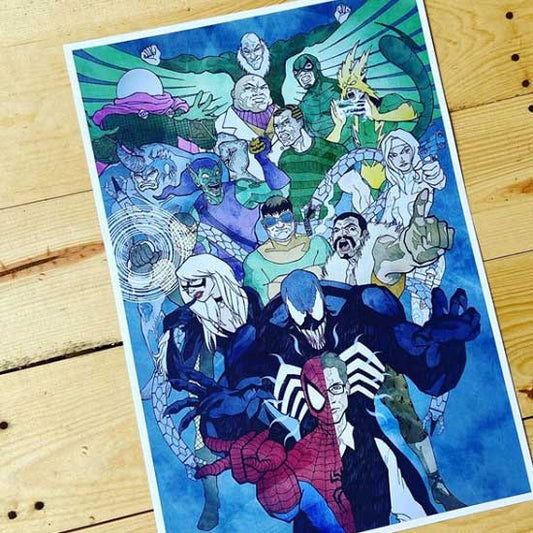
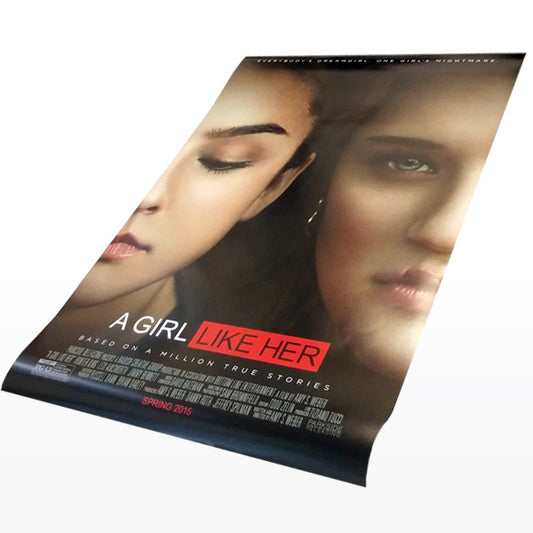
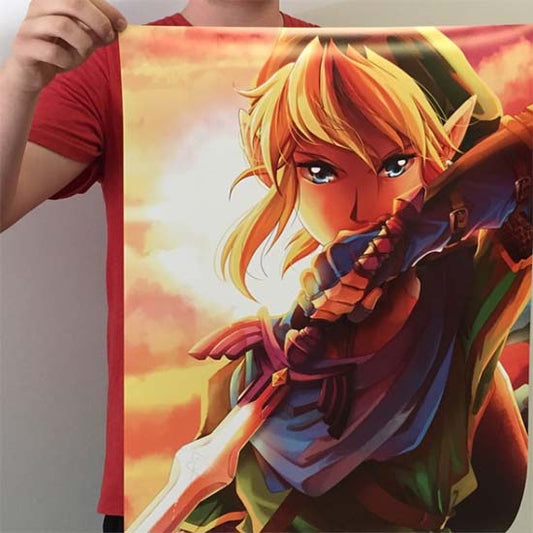
Large-format prints used to showcase your art style, anchor your booth visually, and stop foot traffic. Display prints are your booth's billboard — they're not for sale (or priced as premium pieces), they're for attraction. The bigger and bolder, the better.

  • Sizes: 12×18, 16×20, 18×24, 24×36 and up
  • Purpose: attract attention, communicate your style
  • Hung at eye level or above on grid panels, stands, or walls
  • Use your most striking, highest-impact artwork
  • You're in the right place for these

Art Prints (For Sale)

Smaller prints stocked for sale to buyers at the table. These are your product inventory — the 5×7s, 8×10s, and 11×14s that buyers browse, select, and purchase. Quality and archival standards matter more here because buyers are taking these home to frame and display.

  • Sizes: 4×6, 5×7, 8×10, 11×14, 12×18
  • Purpose: sell to buyers as finished art products
  • Displayed flat in bins, upright in stands, or pinned to grid panels
  • Archival paper and quality matter — buyers are paying for these
  • Visit our Art Prints collection for these

The Complete Booth Signage Toolkit

A fully equipped Artist Alley booth typically uses four to five distinct types of signage, each doing a different job. Here's a breakdown of every category and when to use it.

Large Display Prints

Your primary visual anchors. Large display prints hung at the top or back of your booth grid are what buyers see from across the aisle. These should feature your most striking, most representative work — pieces that instantly communicate your art style and color palette to a stranger walking past at speed.

Recommended sizes: 18×24, 16×20, 24×36. Use 2–4 display prints max — too many and none of them read as special.

Banners

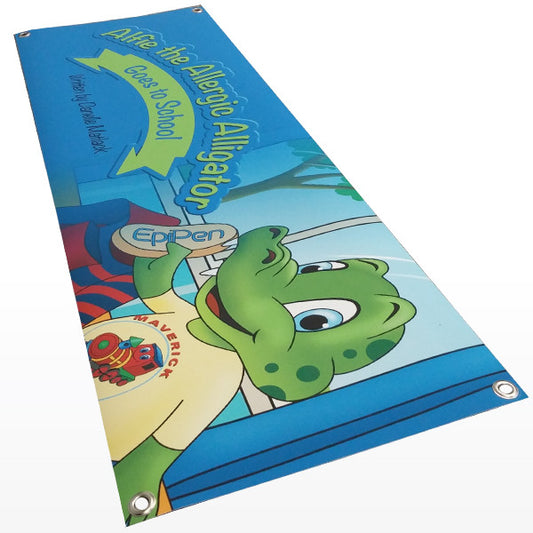
Freestanding banners positioned at the edge of your booth space extend your visual reach into the aisle without taking up table space. They're ideal for displaying your artist name, social handles, or a key artwork at a height that's visible from anywhere on the convention floor.

Best banner types for conventions: Retractable banners (fastest setup, most portable), X-style banners (lightweight, budget-friendly), and polypropylene fabric banners (crisp, vibrant, indoor-optimized).

Foam Board & Gator Board Signs

Rigid display boards that stand on their own or clip to grid panels. Foam board is lightweight and cost-effective — excellent for pricing signs, commission info boards, and display panels. Gator board is heavier and more durable for signs you'll reuse across multiple events.

Best for: Pricing boards, commission open/closed signs, product category labels, and display panels that need to stand rigid without a frame.

Tabletop Signs & Tent Cards

Small signs designed to sit on the table surface. These handle close-range communication — pricing tiers, payment methods accepted, commission waitlist info, social media handles, and "please ask to see more" prompts. Buyers standing at your table will read these; they're a low-effort way to answer common questions without you having to repeat the same information constantly.

Best for: Price lists, Venmo/Square/cash-accepted signs, commission status signs, social handle cards, and product info cards.

Backdrop Prints

A full backdrop behind your table is the most visually impactful single element a convention booth can have. A printed backdrop featuring your artwork, your logo, or a cohesive repeating pattern transforms your space from a table to a branded environment. Buyers remember booths with distinctive backdrops — and they photograph them, which means free social media exposure.

Best for: Artists with established branding, high-traffic conventions where visual differentiation matters most, and booths with a taller grid or pipe-and-drape setup.

Artist Name & Branding Signs

A clear artist name sign at or above eye level is non-negotiable. Buyers who want to find you again on social media, recommend you to a friend, or tag your booth in a photo need to know your name. A branded sign with your artist name and handle removes any friction from that discovery moment — and it signals that you think of yourself as a brand, not just a hobbyist with a table.

Best for: Top of grid panel, above your display prints, or as a tabletop sign facing the aisle.

Best Banner Types for Indoor Convention Booths

Not all banners are created equal — and for convention use, you need something lightweight, fast to set up, and designed for close-range indoor viewing. Here's how the main banner types compare.

Retractable Banners

The most popular convention banner for good reason. The graphic is stored inside a base unit and pulls up on a pole in under 60 seconds — no wrestling with stands, no separate parts to lose. Compact enough to check as airline baggage or fit in a rolling carry-on. The base doubles as a weighted anchor so the banner doesn't tip in high-traffic areas.

Best for: Artists who travel to conventions, high-traffic booths, and anyone who wants the fastest possible setup and breakdown.

X-Style Banners

A lightweight cross-frame stand that holds a printed banner at four corners. No base weight — the X frame is inherently stable on flat floors. Very affordable and easy to transport. The graphic slides on and off the frame in minutes, making swapping between events simple if you have multiple designs.

Best for: Budget-conscious artists, local conventions, and anyone who wants a flexible, affordable outdoor or indoor banner solution.

Polypropylene Fabric Banners

Lightweight fabric banners that print with excellent color vibrancy and sharp detail. Polypropylene fabric resists wrinkles and creases during transport — which is a significant advantage over vinyl banners that can crease and show fold lines. Designed for indoor use and close-range viewing where image quality matters.

Best for: Artist Alley and convention setups where close-range image quality is important and indoor conditions are controlled.

Rigid Sign Materials: Foam Board vs. Gator Board

For signs that need to stand on their own or clip to a grid without rolling or sagging, rigid board materials are the right call. Here's how to choose between the two main options.

Foam Board

Lightweight foam core with a paper surface. Very affordable, easy to cut to custom sizes, and light enough to hang from grid panels with simple clips or binder clips. The standard choice for convention signage that you'll produce fresh before each event or update frequently.

  • Extremely lightweight — easy to transport
  • Budget-friendly — great for disposable or event-specific signs
  • Easy to cut with an X-Acto knife for custom shapes
  • Not ideal for repeated use — edges dent and corners crush over time

Best for: Pricing signs, commission boards, event-specific display panels, and any sign you'll update between conventions.

Gator Board

A denser, more durable rigid board with a harder surface. Resists denting, warping, and moisture better than foam board. Gator board signs hold up across multiple events and years of use without showing wear. Worth the higher upfront cost if you're building permanent booth infrastructure.

  • Significantly more durable than foam board
  • Resists denting, crushing, and edge damage
  • Heavier — factor this into your convention pack list
  • Higher cost per sign, but lower cost-per-use over time

Best for: Permanent artist name signs, reusable display panels, and any sign you plan to use at every event for years.

Recommended Display Print Sizes for Booth Setups

Choosing the right display print size depends on your booth footprint, your grid height, and how far away you need to attract attention. Here's how to think about it.

Size Visibility Range Best Placement Best For
12×18" Up to ~10 ft Upper grid panel, tabletop easel Close-range display, smaller booths, detail-forward art
16×20" Up to ~15 ft Top of grid, center panel, easel stand Primary display anchor, artist alley booth centerpiece
18×24" Up to ~20 ft Top of grid, beside banner, backdrop position High-traffic conventions, statement display pieces
24×36" 20–30+ ft Backdrop, large grid, freestanding easel Maximum-impact display at large conventions, primary booth anchor

General rule: The larger the convention and the more crowded the aisle, the bigger your display prints need to be to compete for attention. A 12×18 works at a small local market. At Anime Expo or a major comic con with thousands of booths, go 18×24 or larger for your display anchors.

Building Your Booth Sign Checklist

First time setting up a convention booth? Here's the complete sign and display checklist experienced artists use to make sure nothing is missing.

✓ Artist Name Sign

Your name and/or artist handle, large enough to read from across the aisle. This is the single most important sign at your booth. Non-negotiable at any event size.

✓ Social Media Handles

Instagram, TikTok, Twitter/X, and any other platform where you post art. Make it visible from the table without a buyer having to ask. A QR code linking to your Linktree or online shop is even better.

✓ Pricing Sign

Clear pricing for every product category at your table. "Prints from $5 — Posters from $20" or a full price list. Buyers who don't know the price point often don't ask — they just move on. Make it easy.

✓ Payment Methods Sign

Cash, card, Venmo, Square, PayPal — whatever you accept, display it. A buyer who wants to purchase but isn't sure you take cards may walk away rather than ask. A small tabletop sign solves this immediately.

✓ Commission Status Sign

Open or closed — and if open, basic info about what you offer and your rate. A clean "Commissions Open" sign draws buyers who might never have thought to ask. It's a passive revenue opportunity every artist with commission availability should be using.

✓ Large Display Prints

2–4 large prints hung at the top of your grid featuring your strongest work. These are your visual anchors — the pieces doing the heavy lifting of attracting attention from a distance. Print them big, print them bold.

✓ Banner (Optional but Powerful)

A retractable or X-style banner positioned at the corner of your booth extends your visual reach into the aisle and communicates your brand identity above the crowd. Especially valuable at large conventions where eye-level competition is intense.

✓ Product Category Labels

Small signs that label different areas of your table — "Prints," "Stickers," "Keychains," "Cards," "Original Art." These help buyers navigate your table independently without having to ask where things are, which keeps traffic flowing and your attention free for real conversations.

Tips for a High-Converting Convention Booth Display

Great signage is necessary — but how you use it matters just as much as what you print. Here's what experienced convention artists know about display strategy.

Go Vertical

Tall displays draw the eye upward and make your booth visible above the crowd. Use the full height of your grid panel. A display print at the top of an 8-foot grid is visible from 3–4 booth lengths away. A print flat on the table is only visible to people already standing at your booth.

Create Visual Hierarchy

Your booth should have a clear visual hierarchy: large display prints at the top draw attention from a distance; mid-size prints and signs at eye level communicate your product range; tabletop signs handle the close-range details. Each layer serves a different viewing distance.

Limit Your Display Print Count

More display prints does not mean more impact. 2–4 carefully chosen large display prints are more effective than 15 medium prints covering every inch of your grid. When everything competes for attention, nothing wins. Choose your very best pieces and give them room to breathe.

Match Your Booth's Visual Identity

Your banner, display prints, signs, and tabletop materials should feel like they belong to the same visual world. Consistent color palette, consistent typography on signs, and a coherent overall aesthetic make your booth look intentional and professional — rather than assembled from mismatched parts.

Print a Test Setup at Home

Before your first convention, assemble your full booth display at home with all your actual prints, signs, and banners in place. Walk across the room and look at it from 10, 20, and 30 feet. What reads? What doesn't? What's missing? It's far better to discover a gap in your display setup at home than after you've already set up on the convention floor.

Reorder Early

Print ordering too close to a convention is one of the most common and avoidable mistakes in Artist Alley. Order your booth signs at least 2–3 weeks before the event. Rush printing and expedited shipping options are available at Printkeg — but giving yourself lead time means you get exactly what you ordered without paying a premium for speed.

Why Artists Choose Printkeg for Booth Signage

  • Artist-first printing — we understand convention setups, Artist Alley booth requirements, and the specific needs of independent creators
  • Affordable pricing without sacrificing quality — professional signage that fits an artist's budget, not a corporate marketing department's
  • No large minimums — order exactly what you need for your booth setup without being forced into bulk quantities
  • Fast turnaround — convention deadlines are non-negotiable; we keep production tight so your signs arrive before the event
  • Premium materials — vibrant color printing on quality substrates that look professional in person, not flat and washed-out
  • File review on every order — we check resolution and setup before printing so you don't show up to a convention with blurry banner art
  • Real human support — if you have questions about what to order, what size to use, or how to set up your file, a real person who understands print production will help you

Booth Signs & Displays FAQ

What signs do I need for an Artist Alley booth?

At minimum: an artist name sign, a pricing sign, and 2–4 large display prints. Add a social media handles sign, a payment methods sign, and a commission status board and you have a fully equipped setup. A retractable or X-style banner is a worthwhile upgrade for larger conventions where aisle competition is intense. See our complete booth checklist above for a full breakdown.

What size display prints work best for a convention booth?

For Artist Alley and convention booths, 16×20 and 18×24 are the most popular display print sizes. At smaller local events, 12×18 works well. At major conventions (Anime Expo, Comic-Con, Otakon, Katsucon, etc.) where you need visibility from a distance, 18×24 and 24×36 are worth the step up. Match your display print size to the scale of the event and the distance from which you need to attract attention.

What's the best banner type for an indoor convention booth?

For most convention artists, a retractable banner is the top choice — fast setup, compact storage, and no loose parts to manage. X-style banners are a more affordable alternative with similar portability. Polypropylene fabric banners offer excellent image quality for indoor close-range viewing. All three are better choices than vinyl banners for indoor conventions, where the stiffness and glare of vinyl can look out of place.

What's the difference between foam board and gator board?

Foam board is lightweight and inexpensive — ideal for signs you'll update or replace between conventions, or for single-event use. Gator board is denser, more durable, and holds up across years of repeated use without denting or crushing. For signs you plan to reuse at every event (your artist name sign, permanent pricing boards), gator board is the better long-term investment. For event-specific or frequently updated signs, foam board is the practical choice.

What's the difference between display prints and art prints for sale?

Display prints are large-format prints used to attract attention and showcase your art style at your booth — they're your visual anchors, not your sales inventory. Art prints for sale are typically smaller prints (5×7, 8×10, 11×14) printed on archival paper that buyers purchase and take home. You need both, but they serve completely different functions. For art prints to sell, visit our Fine Art Prints collection.

How do I make my convention booth stand out?

Go vertical with your display prints, use bold and high-contrast artwork for your display anchors, maintain a consistent visual identity across your signs and banner, and make sure your artist name is readable from across the aisle. Clear pricing and a visible social handle sign reduce buyer friction significantly. And above all — let your strongest work do the visual heavy lifting. The best booth display is one that makes someone stop mid-step because the art genuinely caught their eye.

How far in advance should I order my booth signs?

Order at least 2–3 weeks before your convention date. Most orders ship within 1–3 business days, but giving yourself lead time means you have room to address any issues and avoid paying for expedited shipping. For your first convention especially, having your full booth setup in hand a week before the event gives you time to do a dry run at home and identify anything you want to add or adjust.

What file resolution do I need for booth signs and display prints?

300 DPI at the finished print size for standard display prints (12×18, 16×20, 18×24). For very large format prints and banners (24×36 and up), 150 DPI is acceptable because viewing distance increases — a 24×36 banner is typically viewed from several feet away, not up close. For banner graphics with text, keep text elements at 300 DPI even if the background is at 150 DPI to ensure legibility. Always design at the correct DPI from the start — upscaling a low-resolution file produces blurry results that are obvious in person.

Set Up Your Best Booth Yet

Whether you're setting up your first Artist Alley table or refining a booth you've run for years, the right signage makes a measurable difference. Bold display prints, clear signs, and a cohesive visual identity are what separate the booths people stop at from the ones they walk past. Start with what you need, build on what works, and let Printkeg handle the printing so you can focus on the art.