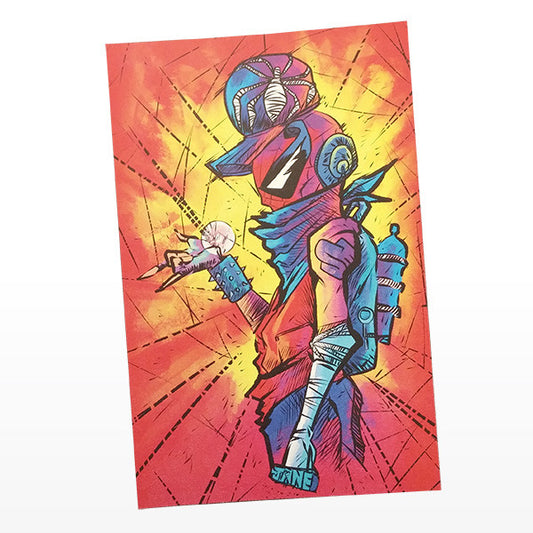
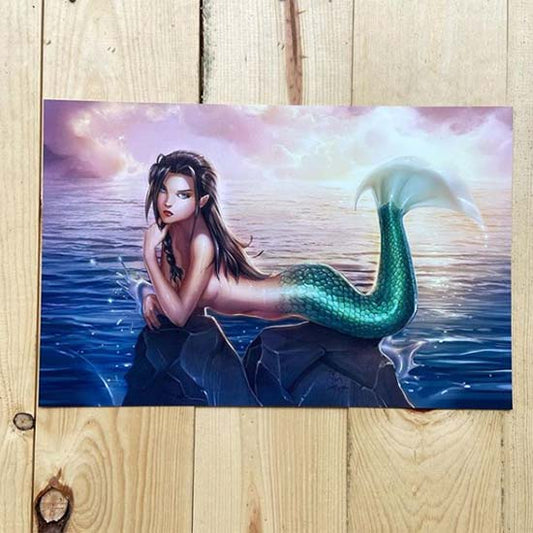
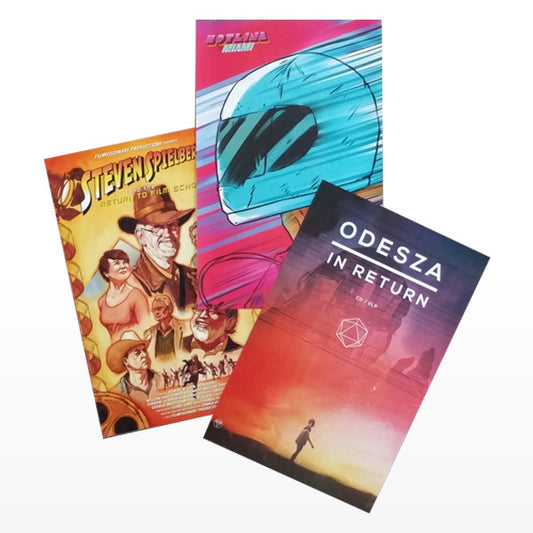
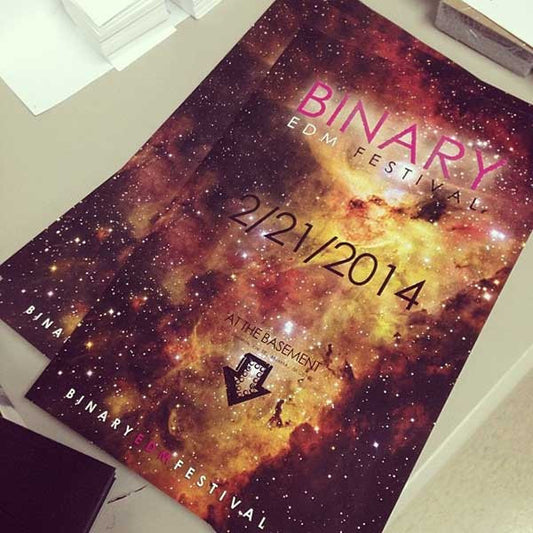
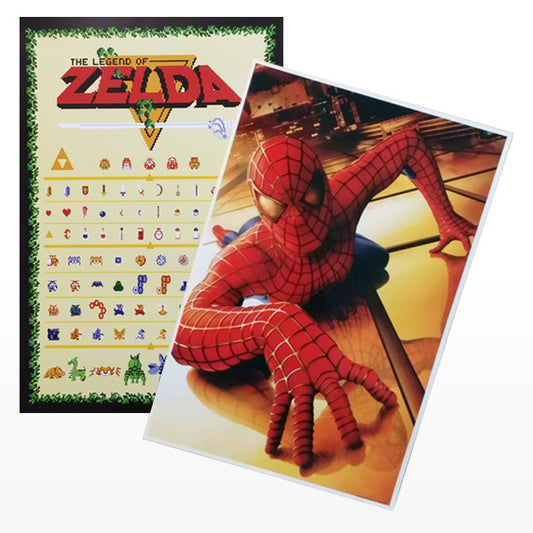
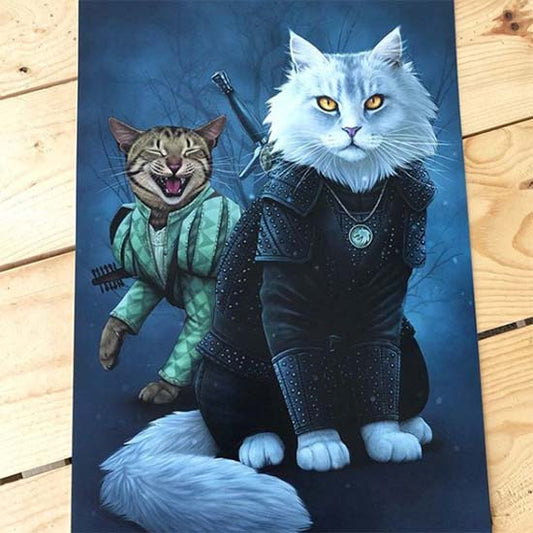
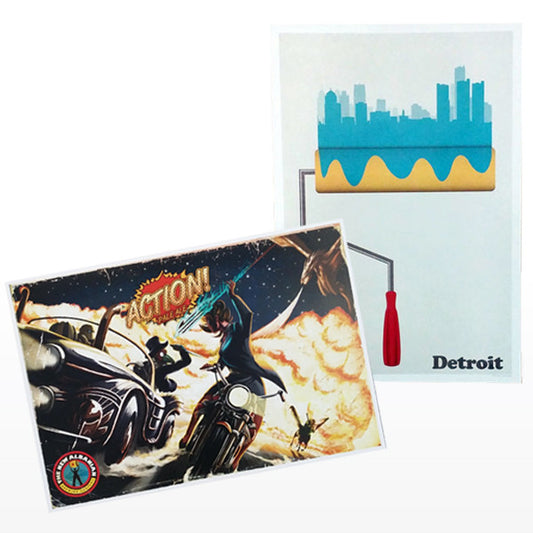
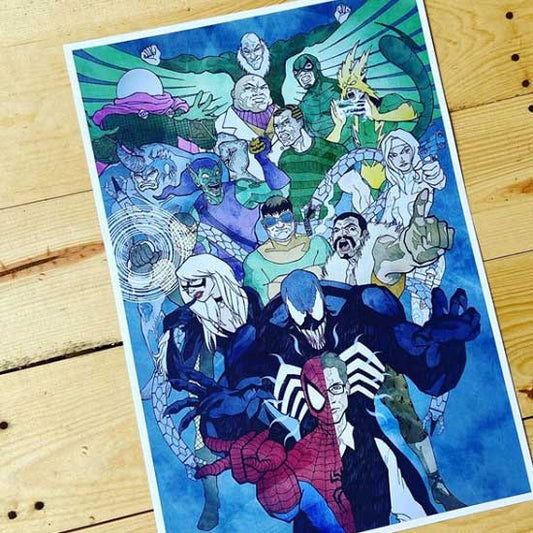
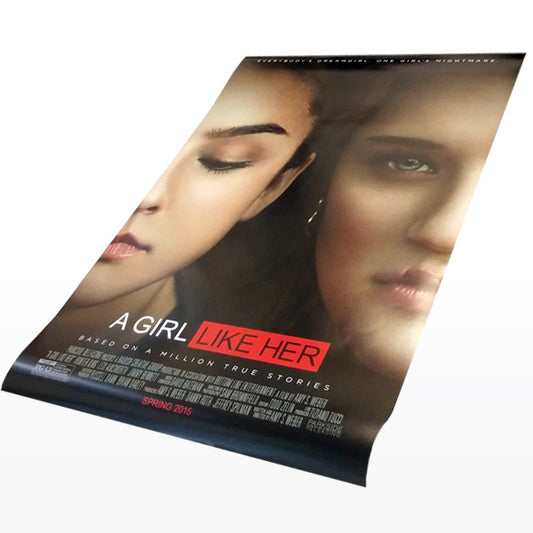
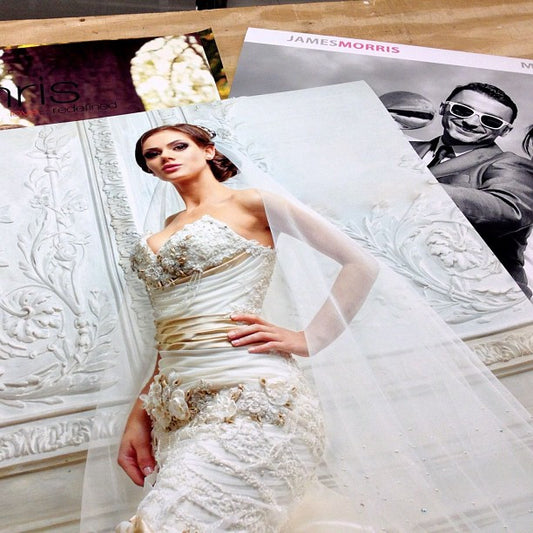
Create high-quality custom posters for art, events, and promotions. From standard sizes like 11x17 and 12x18 to large-format and panoramic prints, we offer a wide range of options to fit your project.
Choose from gloss, matte, textured, or photo paper to achieve the perfect look — whether you're printing artwork, marketing materials, or display posters.
Unlike mass-market printers, we focus on artist-friendly poster printing with better materials, flexible file options, and hands-on support.
Poster Printing Built for Artists and Real-World Use
Not all poster printing is created equal. Many online printers focus on bulk orders and generic paper options. At Printkeg, we focus on artist-friendly poster printing with better materials, flexible quantities, and hands-on support.
Whether you're preparing for an Artist Alley booth, launching a new print online, or promoting an event, our poster printing is designed to help your work look sharp, sell well, and hold up in real-world conditions.
- Short runs for artists and small businesses — no massive minimums required
- Premium paper options for artwork and photography
- Multiple designs per order (great for conventions and product launches)
- File checks for resolution, bleed, and sizing before we ever press print
- Real human support from people who understand art and print production
Art Posters vs. Promotional Posters: Which Do You Need?
Not all posters serve the same purpose. Before choosing a size or paper, it helps to know which category your project falls into — because the right decisions for an art print are often different from the right decisions for an event flyer.
Art Posters
Designed for selling, framing, gifting, and long-term display. These posters prioritize color accuracy, fine detail, and premium presentation. The goal is a print that looks like it belongs in a gallery or an artbook.
- Best for: artists, illustrators, photographers, fan art sellers
- Popular sizes: 12×18, 13×19, 16×20, 18×24
- Often printed on matte or photo paper for a refined finish
- Buyers expect to frame these — match the size to standard frame dimensions
Promotional Posters
Built for visibility, volume, and cost efficiency. These posters are designed to communicate quickly and make an impact from a distance — not to be framed on a wall for years.
- Best for: businesses, events, campaigns, retail signage
- Popular sizes: 11×17, 12×18, 18×24
- Often printed on gloss for bold, eye-catching color
- Quantity and speed matter more than archival quality
Complete Poster Size Guide for Artists
Choosing the right poster size is one of the most important decisions you'll make before printing. Too small and your detail gets lost. Too large and you're spending more than necessary on a piece that doesn't fill the wall the way you imagined. Here's a full breakdown of every size we offer and exactly when to use each one.
Small Poster Sizes
Small posters are the workhorses of any artist's print lineup. They move quickly, they're affordable to produce, and they let buyers dip their toes in before committing to a larger piece.
11×17 Posters
Aspect Ratio: ~2:3 | Min Resolution: 3300×5100 px
A versatile small poster size that works well for flyers, compact art prints, event announcements, and retail display. Affordable to produce in short runs. A go-to for artists who want variety at a low cost-per-unit.
12×18 Posters
Aspect Ratio: 2:3 | Min Resolution: 3600×5400 px
One of the most popular poster sizes for artists. The clean 2:3 aspect ratio is easy to design for and matches the proportions of many digital canvases. Big enough to show real detail. Affordable enough to stock in volume for conventions and online shops.
13×19 Posters
Aspect Ratio: ~2:3 | Min Resolution: 3900×5700 px
The premium small-to-mid size. Slightly larger than 12×18, making it feel noticeably more substantial in person. A favorite among photographers and fine artists who want a step up from standard poster sizing without jumping to large format. Fits in standard 13×19 frames.
Mid-Size Poster Sizes
Mid-size posters occupy the sweet spot between affordable and impressive. These are the prints buyers hang on their walls, frame above their desks, and keep for years. Getting the quality right here matters most.
16×20 Posters
Aspect Ratio: 4:5 | Min Resolution: 4800×6000 px
A classic art print size that sits perfectly between compact and large format. The 4:5 ratio is portrait-friendly and ideal for detailed character illustrations, scenic pieces, and photography. Fits in widely available 16×20 frames — a huge convenience for buyers.
18×24 Posters
Aspect Ratio: 3:4 | Min Resolution: 5400×7200 px
The standard "big poster" that most people picture when they hear the word poster. Commanding in person, highly frameable, and a proven seller for artists with detailed, high-resolution work. Excellent for group compositions, panoramic scenes, and premium limited-edition prints.
Large & Extra-Large Poster Sizes
Large-format posters are statement pieces. They anchor rooms, stop foot traffic at events, and signal to buyers that what they're looking at is genuinely special. These require high-resolution files and careful pre-press preparation — but the results are extraordinary.
20×24 Posters
Aspect Ratio: 5:6 | Min Resolution: 6000×7200 px
A large format option that bridges the gap between the 18×24 and full 24×36. Excellent for detailed multi-character pieces and scenic illustrations where the extra space makes a meaningful visual difference.
24×36 Posters
Aspect Ratio: 2:3 | Min Resolution: 7200×10800 px
The largest standard poster size and the most dramatic. A 24×36 commands any wall it's placed on. Used for event displays, premium limited-edition art prints, and large-format photography. Requires high-resolution source files — do not attempt to upscale a small file to this size.
Panoramic Posters
Aspect Ratio: Varies (wide-format) | Resolution: 300 DPI at size
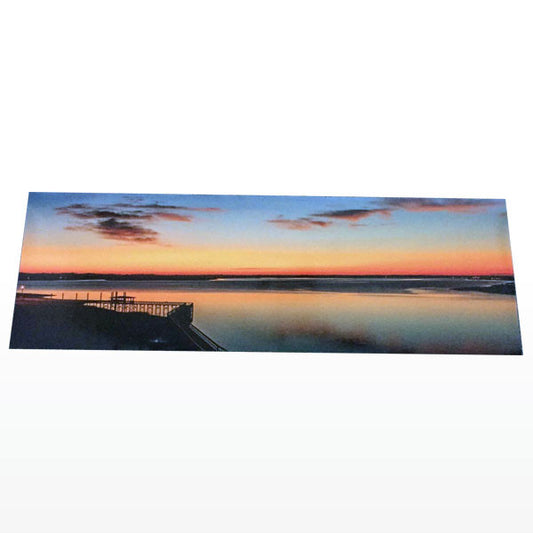
Wide-format prints designed for sweeping landscape compositions, cityscapes, and cinematic illustrations that don't fit a standard vertical or horizontal ratio. Perfect for artists whose work has a distinctly cinematic or horizontal-first composition.
Poster Size Quick Reference Chart
Use this table to plan your print lineup at a glance. All resolutions are calculated at 300 DPI — the professional standard for poster printing.
| Size |
Aspect Ratio |
Min Resolution (300 DPI) |
Best For |
| 11×17 |
~2:3 |
3300×5100 px |
Flyers, small art prints, compact displays |
| 12×18 |
2:3 |
3600×5400 px |
Convention prints, art prints, promotions |
| 13×19 |
~2:3 |
3900×5700 px |
Premium small posters, photography, and fine art |
| 16×20 |
4:5 |
4800×6000 px |
Character art, photography, wall art |
| 18×24 |
3:4 |
5400×7200 px |
Statement art prints, event display, and limited editions |
| 20×24 |
5:6 |
6000×7200 px |
Detailed group art, scenic illustrations |
| 24×36 |
2:3 |
7200×10800 px |
Large-format events, premium wall art, signage |
| Panoramic |
Varies |
300 DPI at print dimensions |
Landscapes, cinematic art, wide compositions |
Understanding Aspect Ratios: The Detail Most Artists Skip
Aspect ratio is the relationship between a print's width and height. It's one of the most important — and most misunderstood — concepts in poster printing. Get it wrong, and your art gets cropped unexpectedly. Get it right, and your files go to print exactly as designed.
The key rule: your digital canvas aspect ratio must match your print size's aspect ratio. If they don't match, the printer has to either crop your image or add white borders to fill the gap.
2:3 Ratio
Covers 12×18 and 24×36. The most common ratio for portrait-orientation poster art. If you design on a 4000×6000 px canvas, you're working at a perfect 2:3 and can scale to either size without cropping.
4:5 Ratio
Covers 16×20. A slightly squarer portrait ratio that gives you more horizontal breathing room. Great for character art with dynamic horizontal compositions or group shots with multiple subjects.
3:4 Ratio
Covers 18×24. Similar to 4:5 but slightly taller. The 18×24 is one of the most popular large-format art print sizes, making this ratio worth designing to if you plan to offer large prints.
Landscape Ratios
Simply flip any of the above ratios. A 3:2 landscape canvas works for 18×12 landscape prints. Always confirm the orientation you intend before submitting — a portrait file submitted as landscape will print sideways.
Pro tip: If you want one piece of art to work across multiple print sizes, design at your largest intended size and use a "safe zone" — keep all critical elements (faces, focal points, key text) at least 0.5 inches from every edge. This gives you room to crop for smaller sizes without losing anything important.
Resolution: Why Your Print Might Look Blurry (And How to Fix It)
Resolution is the #1 technical mistake artists make when preparing files for poster printing. A file that looks razor-sharp on your monitor can print blurry, soft, or pixelated at poster size — and there's no way to fix it after printing.
Here's why: monitors display at 72–96 DPI. Professional printing requires 300 DPI. These are not interchangeable. A file sized at 1200×1800 pixels might look fine as a screen image, but at 300 DPI it only prints cleanly at 4×6 inches. Try to print it at 12×18 and it's a 100 DPI file — noticeably soft in print.
300 DPI — The Standard
Required for sharp, professional results at all standard poster sizes up to 18×24. If you're setting up a new canvas and plan to print it, always set DPI to 300 before you draw a single line. You cannot reliably add resolution after the fact.
150 DPI — Large Format Exception
For very large prints (24×36 and up), 150 DPI is sometimes acceptable because viewing distance increases with poster size. At arm's length, a 24×36 at 150 DPI can still look excellent. Always prefer 300 DPI when your software and file size allow it.
72 DPI — Screen Only
Files designed for web or social media are typically 72 DPI. These files will almost always print blurry at poster sizes. Do not attempt to upscale — artificially increasing DPI in your software adds pixels through interpolation, not real detail.
Vector Files — The Exception
Artwork created in Adobe Illustrator or Affinity Designer as vector graphics is resolution-independent — it scales to any size without loss of quality. If your work is vector-based, you can produce a print of any size without worrying about DPI.
If you're unsure whether your file will print cleanly, our team reviews every file before it goes to press. If we spot a resolution issue, we'll contact you before printing so you're never surprised by the result.
Poster Paper Options: A Deep Dive for Artists
Paper choice changes everything about how a print is experienced in person. The same image printed on gloss, matte, and photo paper will feel like three different products — and buyers respond to them differently. Here's how to choose.
Gloss
High-shine surface with punchy, saturated color and strong contrast. The finish that is closest to what you see on a monitor. Eye-catching under convention lighting and event settings.
Best for: bold lineart, graphic illustration, promotional posters, event flyers, high-contrast photography.
Watch out for: fingerprints and glare in well-lit spaces.
Matte
No shine, no glare. A soft, flat surface that gives prints a painterly, refined quality. Colors appear slightly less saturated than on screen, but the overall effect is sophisticated and gallery-appropriate.
Best for: watercolor-style art, pastel and soft-palette illustrations, photography with a film aesthetic, and any print meant to be viewed under bright overhead lighting.
Watch out for: slightly reduced color vibrancy compared to gloss.
Photo Paper (Lustre)
A semi-sheen finish that splits the difference between gloss and matte. Vibrant color without harsh glare. The professional standard for photographic and fine art prints — rich, detailed, and impressive in person.
Best for: detailed character illustrations, photography, fine art prints, anything meant to be framed and displayed long-term.
If unsure, start here. Photo paper is the most versatile choice for art prints.
Looking for archival-quality paper for gallery sales or high-end collectors? Explore our fine art printing collection — acid-free, fade-resistant papers engineered for prints that last for generations.
Popular Uses for Poster Printing
Our poster printing serves a wide range of creative and commercial projects. Here's how different types of customers put our posters to work.
Art Prints
Sell prints online, at conventions, at local markets, and through pop-up events. No minimum orders means you can test a new design without overcommitting to inventory.
Convention & Artist Alley Booths
Stock a full table lineup with multiple designs across multiple sizes. Print short runs per design to minimize overstock risk. Fast turnaround makes last-minute additions possible even close to the event date.
Event Posters
Promote concerts, shows, fundraisers, festivals, school events, and community gatherings with bold custom posters. Gloss finish maximizes visual impact in high-traffic spaces.
Business Promotions
In-store marketing, product launches, seasonal displays, menus, and branded signage. Large-format sizes command attention in retail environments.
Photography Prints
Present your work at its best on photo paper or fine art paper. Ideal for portfolio displays, client gifts, gallery submissions, and online print sales.
Wall Decor
Custom wall art for homes, offices, studios, classrooms, and creative workspaces. The 16×20 and 18×24 sizes are especially popular for room-defining display pieces.
File Preparation: How to Set Up Your Poster File Correctly
Most print problems trace back to file preparation. Here's exactly how to set up your file so it goes to print without issues.
Step 1 — Set Your Canvas at the Right Size and DPI from the Start
Open your design software (Photoshop, Clip Studio Paint, Procreate, Affinity Designer, Illustrator) and create a new document. Set the width and height to your exact print dimensions in inches and set the resolution to 300 DPI. Do this before you draw anything. You cannot reliably add resolution after the artwork is complete.
Step 2 — Add Bleed (For Full-Bleed Designs)
If your design runs to the edge of the poster with no white border — a "full-bleed" layout — you need to add bleed. Bleed is extra artwork that extends beyond the final trim line, giving the cutter room to trim without leaving a thin white sliver on the edge.
- Standard bleed: 0.125 inches on all sides for most poster sizes
- For larger posters (18×24 and up): 0.25 inches of bleed recommended
- Keep all critical elements (text, faces, key details) at least 0.25 inches inside the trim line
Step 3 — Export at the Right Format
Export your final file in one of these formats:
-
PDF (preferred) — preserves resolution, supports bleed marks, and is the professional standard for print-ready files
-
TIFF — lossless image format, ideal for high-resolution artwork files
-
High-quality JPG — acceptable for most poster printing when exported at maximum quality (quality setting 10–12 in Photoshop)
Avoid PNG files exported at web resolution. Avoid JPGs compressed aggressively for the web. When in doubt, export at the highest quality setting your software offers.
Step 4 — Color Mode
Design in RGB color mode unless your printer specifically requests CMYK. Our presses are calibrated for RGB files, and converting to CMYK before submitting can actually shift colors unexpectedly. We handle the color conversion on our end.
Step 5 — Do a Final Resolution Check
In Photoshop: go to Image → Image Size. Confirm your DPI reads 300 (or higher) at your intended print dimensions with "Resample" turned off. If the DPI drops below 200 when you enter your target print size, your file may not print with full sharpness at that size.
Poster Printing for Artist Alley: Building Your Convention Print Lineup
Convention season is a different beast from standard print sales. You're not just printing one piece — you're building an entire table display that needs to attract strangers, work across multiple price points, and move efficiently over a two or three-day event. Here's how to think about it strategically.
Display Anchors (11×17 or 12×18)
Your large prints do one job: stop foot traffic. Pick 2–4 of your strongest, most detailed pieces for this size. These don't have to be your biggest sellers — they're your visual hooks that draw people to your table from across the aisle.
Bread-and-Butter Prints (5×7 or 8×10)
Mid-size prints are your primary revenue driver. Stock 10–20 different designs and price them at an accessible point. These are what most convention buyers can comfortably purchase on impulse without overthinking it.
High-Volume Impulse Buys (4×6)
Small prints, postcards, and mini prints move fast at low price points. Bundle deals (3 for $10 or 5 for $15) encourage buyers to grab multiple designs. These keep your revenue consistent even during slow traffic periods.
Premium Limited Editions
Consider one or two premium pieces — larger sizes, specialty paper, or numbered limited editions — at a higher price point. These add prestige to your table and attract serious collectors who want something exclusive.
Ordering tip: Order a proof print of every new design before your convention run. Colors shift between screen and print, and a $3 proof print is far cheaper than discovering a color problem after ordering 50 copies.
Pre-Print Checklist: Run This Before Every Order
Use this as a final quality gate before submitting your file. Most print problems are caught (and fixed) at this stage.
- ✅ Canvas is set to 300 DPI at the exact print dimensions
- ✅ Aspect ratio matches the intended print size
- ✅ Bleed added (0.125"–0.25" on all sides for full-bleed layouts)
- ✅ All critical elements are at least 0.25" inside the trim line
- ✅ File exported as high-quality PDF, TIFF, or maximum-quality JPG
- ✅ Color mode is RGB
- ✅ Zoomed in to 100% on screen — no visible pixelation or compression artifacts
- ✅ A proof print has been ordered for any new design before the full production run
Framing Your Poster Prints: Sizing for Standard Frames
One of the most common questions buyers ask before purchasing a print: "Does this fit a standard frame?" Designing your prints to fit standard frame sizes removes a friction point and makes the purchase decision easier. Here's how the most popular poster sizes map to commonly available frames.
| Print Size |
Standard Frame Available? |
Notes |
| 11×17 |
Yes |
Available at most art supply and big-box stores |
| 12×18 |
Somewhat — specialty sizes |
Widely available online; less common in retail stores |
| 13×19 |
Yes |
Standard photo/art frame size at most art retailers |
| 16×20 |
Yes — widely available |
One of the most common frame sizes easy for buyers to find |
| 18×24 |
Yes — poster frames |
Standard poster frame size at IKEA, Target, and art stores |
| 24×36 |
Yes — large poster frames |
Widely available, but buyers may need to search; price point is higher |
Why Print Posters with Printkeg?
-
Archival-quality printing — professional color calibration and premium ink for long-lasting, fade-resistant results
-
No minimum order quantities — print one proof or 500 prints for a convention run
-
Multiple designs per order — upload up to 5 different files and split quantities across designs
-
File review before production — we check resolution, bleed, and sizing before printing and reach out if something looks off
-
Fast turnaround — convention deadlines are real; we get your order out so you're not scrambling the week before
-
Real human support — not a bot, not a ticket system. People who understand art and print production
"Amazing quality! I was blown away by how crisp and vibrant my posters turned out."
Large & Panoramic Posters
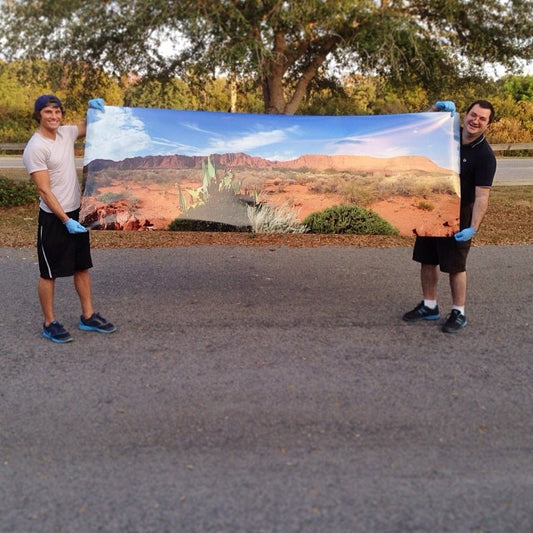
When standard portrait and landscape sizes don't fit your composition, panoramic printing gives you the freedom to work in truly wide or unconventional formats. Panoramic posters are ideal for sweeping landscape scenes, horizontal city compositions, multi-character ensemble pieces designed for a wide field, and any artwork with a distinctly cinematic quality. These formats allow for more detail, more visual storytelling, and a stronger presence from a distance. If your art was built to breathe, the panoramic format lets it.
Poster Printing FAQs
What poster size should I choose?
It depends on how you plan to use the poster and who you're making it for. For artists selling at conventions or online, 12×18 and 13×19 are the most popular sizes — they showcase real detail and fit standard frames. For promotional use or events, 11×17 handles flyers and compact displays well, while 18×24 and 24×36 maximize visibility from a distance. When in doubt, the 12×18 is almost always the right starting point.
What paper is best for art prints?
For most art prints, we recommend photo paper (lustre finish) as the default. It delivers vibrant color, strong detail, and a semi-sheen finish that looks professional framed or unframed. Matte paper is excellent for soft-palette or watercolor-style art and any print that will be displayed under bright overhead lighting. Gloss is best for bold graphic illustration and promotional posters where maximum color punch matters most.
Can I print multiple designs in one order?
Yes. Many of our poster products allow you to upload multiple files and split your print quantity across them while still receiving volume pricing. This is especially useful for artists building a convention print lineup with many different designs.
What file format should I submit?
PDF is preferred for print-ready files. TIFF and high-quality JPG (maximum quality export) are also accepted. Avoid web-compressed JPGs or PNG files exported at 72 DPI. If you're unsure about your file, submit it and our team will review it before printing.
Do I need to add bleed to my file?
If your design has a full-bleed layout (color or artwork that runs to the edge of the poster with no white border), yes — add 0.125" of bleed on all sides for standard sizes, or 0.25" for large format. If your design has a white border, bleed is not required.
Will you review my file before printing?
Yes. We review every file for resolution, bleed, and sizing before it goes to press. If we notice a technical issue that could affect print quality, we'll reach out before printing — not after.
Do you offer large-format poster sizes?
Yes. We offer large-format printing up to 24×36 and beyond, as well as panoramic formats for wide-aspect compositions. Reach out if you need a custom size outside our standard listings.
Are your posters suitable for selling as art prints?
Absolutely. Our poster printing is used by hundreds of independent artists, illustrators, photographers, and fan artists who sell prints online and at conventions. We support short runs, multiple designs per order, and premium paper options specifically chosen to meet the standards serious art print buyers expect.
Can I order a custom poster size?
Yes. If you need a size that isn't in our standard listings, choose the closest available size and include your exact finished dimensions in the order notes. We can often accommodate custom trim sizes depending on the product and layout. Contact us if you have specific requirements before ordering.