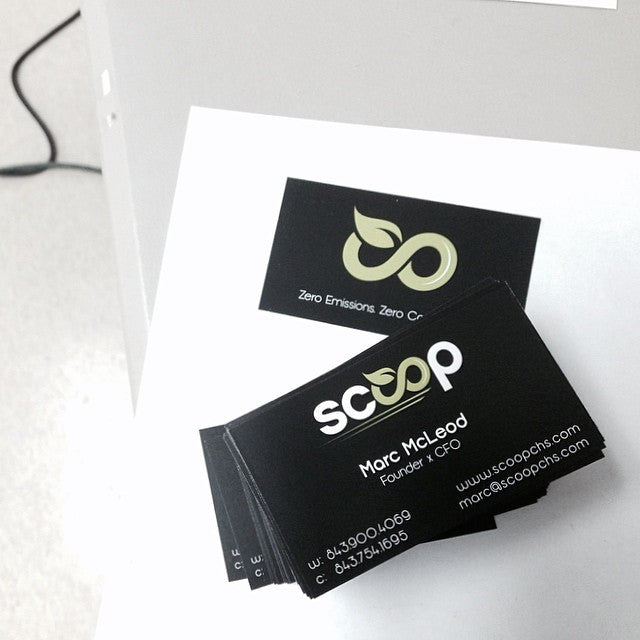
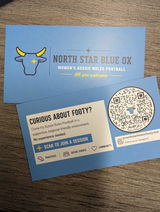
Printkeg's classic business cards are standard 3.5" × 2" cards printed in full color on 16pt or 18pt cardstock, with gloss UV, matte, uncoated, or spot UV finishes and optional rounded corners. Both sides print in full color, and standard production is 2–4 business days.
They're built for the people who hand out cards in person: small business owners and freelancers, artists at conventions and artist alleys, event vendors and makers, and anyone doing networking or sales. A card is often the first physical thing someone holds from your brand, so the stock and finish matter as much as the design.
Choose your stock and finish
-
16pt C2S, gloss UV (most popular): high shine and the most saturated color. Not writable. Best for photography, bold artwork, and bright brand colors.
-
16pt C2S, matte: low glare with a soft, understated look. Takes pencil or gel pen. Best for creatives, consultants, and minimal designs.
-
16pt, uncoated: natural paper texture with no sheen. Takes any pen. Best for appointment cards, handwritten notes, and pricing.
-
18pt C1S, UV front: a thicker card with a glossy front and an uncoated back you can write on. Best for networking, trade shows, and follow-up notes.
-
Spot UV: glossy accents over a matte background. Writable only on the matte areas. Best for logos and details you want to catch the light.
Quick rule: gloss makes color pop, matte reads refined, uncoated is for writing, and spot UV adds contrast you can feel.
How many to order
-
250–500: a single event, a trial run of a new design, or a seasonal art sale (per design).
-
500–1,000: regular networking and day-to-day client contact.
-
1,000+: brand awareness campaigns, handouts in shipped orders, or a team sharing one design.
Set up your file
-
Size with bleed: 3.75" × 2.25" (the 3.5" × 2" card plus 0.125" on every side). Extend backgrounds and images all the way to this edge.
-
Safe zone: keep text and logos at least 0.125" inside the trim line, which is 0.25" from the edge of your file.
-
Resolution: 300 DPI at final size. Images pulled from a website are usually too low.
-
Color: design in CMYK. Use plain 100% K black for small text and a rich black only for large dark areas.
-
File type: PDF is preferred, with fonts embedded or outlined. JPG, PNG, and TIF also work.
-
Spot UV: include a second file or page as a mask, with 100% black where the gloss goes and white everywhere else.
Not sure your file is ready? Check it with the free Bleed & Safe Zone Guide and Color Mode Checker at tools.printkeg.com, or add a Digital Proof below.
Design tips that make cards work
- Lead with three things: your logo, your name, and one call to action (a website or a QR code).
- Cut everything else. A crowded card gets skimmed and forgotten.
- Point your QR code to a portfolio, shop, or booking page, and test it before you order.
- Use your brand colors consistently and limit yourself to two fonts.
- Keep body text at 7pt or larger so it reads at arm's length.
Optional add-ons
-
Digital Proof: review a PDF of your card before it prints.
-
Graphic Fix: we adjust bleed, sizing, or placement so your file prints cleanly.
-
Custom Design: work with a designer to create or refine your card.
-
Instructions: tell us about deadlines, event dates, or special requests.
-
Rounded corners: a softer, finished look that can add slightly to turnaround.
Production and shipping
- Standard production: 2–4 business days.
- Rush production is available for event deadlines.
- Ships by UPS or USPS, depending on your speed and location.
Frequently asked questions
Can I print on both sides?
Yes. Both sides print in full color. Upload a separate file or page for the front and the back.
What file size should my business card be?
Set up your file at 3.75" × 2.25" so it includes 0.125" of bleed on every side. The card trims to 3.5" × 2". Keep text at least 0.125" inside the trim line.
What file types do you accept?
PDF is preferred, with fonts embedded or outlined. JPG, PNG, and TIF also work. All files should be 300 DPI at final size and set up in CMYK.
Which business cards can I write on?
Uncoated cards take any pen. The 18pt C1S option has a glossy front and an uncoated back you can write on. Matte cards accept pencil and gel pen, but ballpoint can skip. Gloss UV cards are not writable.
What's the difference between 16pt and 18pt?
18pt cardstock is slightly thicker and stiffer than 16pt. Our 18pt option is coated with UV on the front only, so the back stays writable.
How do I set up a file for spot UV?
Send your normal full-color artwork plus a matching mask file. In the mask, color the areas you want glossy 100% black and leave everything else white. Both files must be the same size and alignment.
Do rounded corners change turnaround?
Rounded corners are an extra finishing step and can add slightly to production time. If you're working toward an event date, note it in the Instructions add-on.